The best dual monitor arms depend on your screens’ size and weight, the VESA pattern, and how much adjustment your desk setup needs. These five options range from a tall stacked mount to arms for ultrawide displays, with desk fit and load capacity as key checks.
Quick Top Products
HUANUO FlowLift Dual Monitor Stand
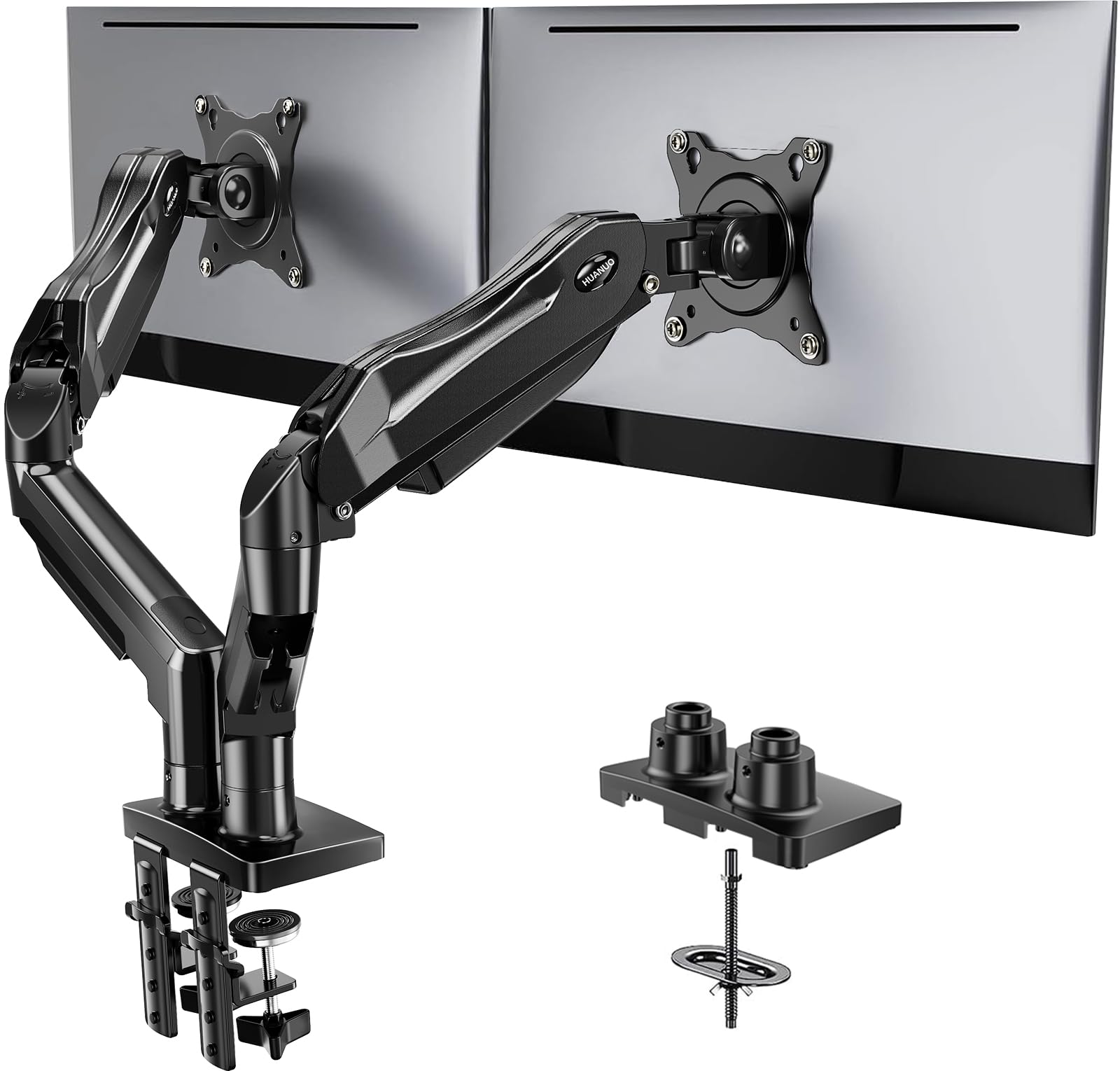
- Fits two 13–32-inch screens weighing 4.4–19.8 pounds each.
- Offers +85°/−50° tilt, ±90° swivel and 360° rotation.
- Supports C-clamp or grommet mounting and routes cables along the arms.
Best For: People who want independently adjustable positioning for two 13–32-inch displays.

HUANUO 17–32-Inch Stacked Monitor Mount
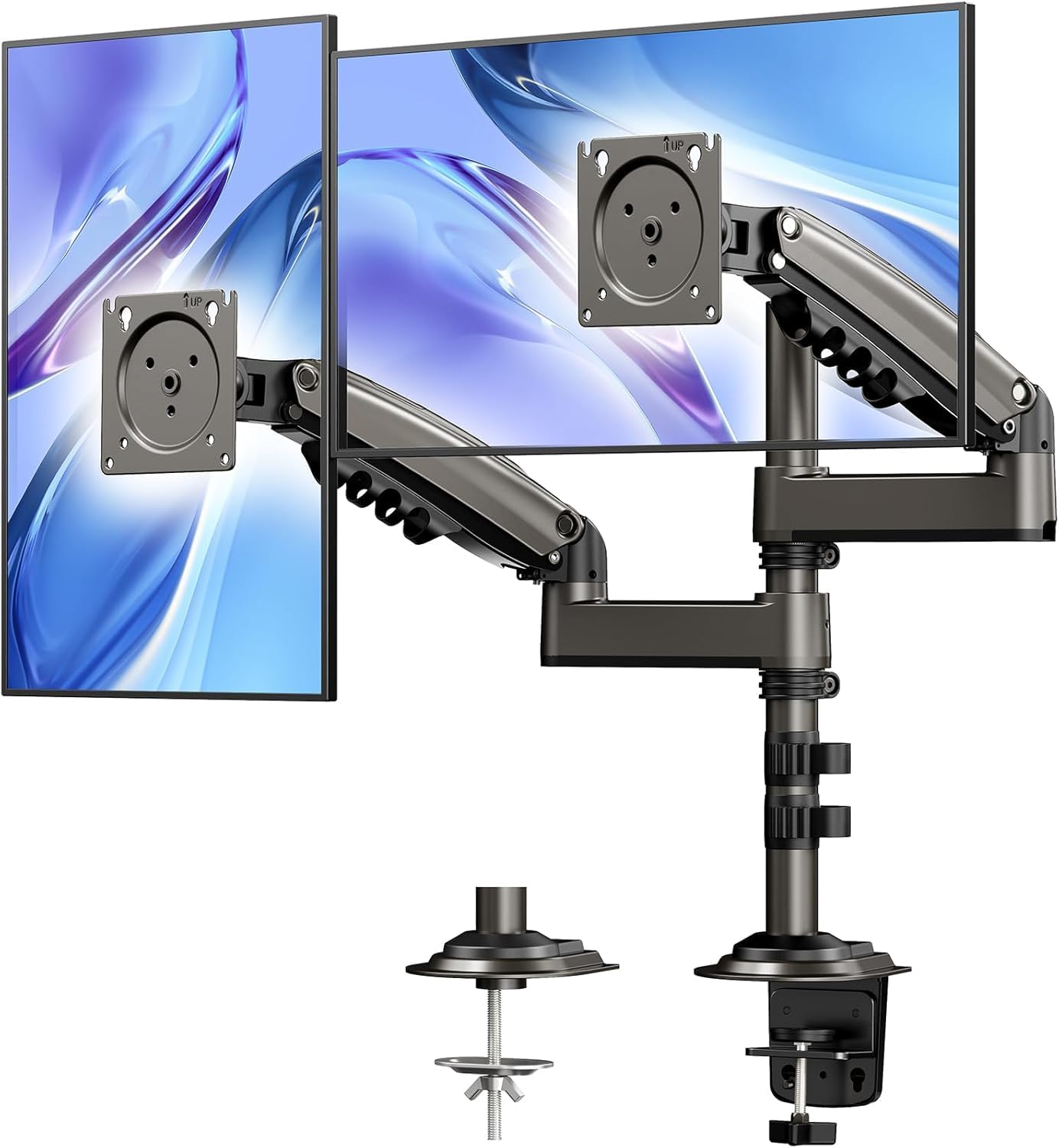
- Arranges two 17–32-inch monitors vertically.
- Raises screens up to 25.19 inches with a 17-inch extension.
- Supports tilt, swivel and 360° rotation, with C-clamp or grommet mounting.
Best For: Users who prefer one monitor above the other and need extra vertical height.
HUANUO HNDS7 Dual Monitor Stand
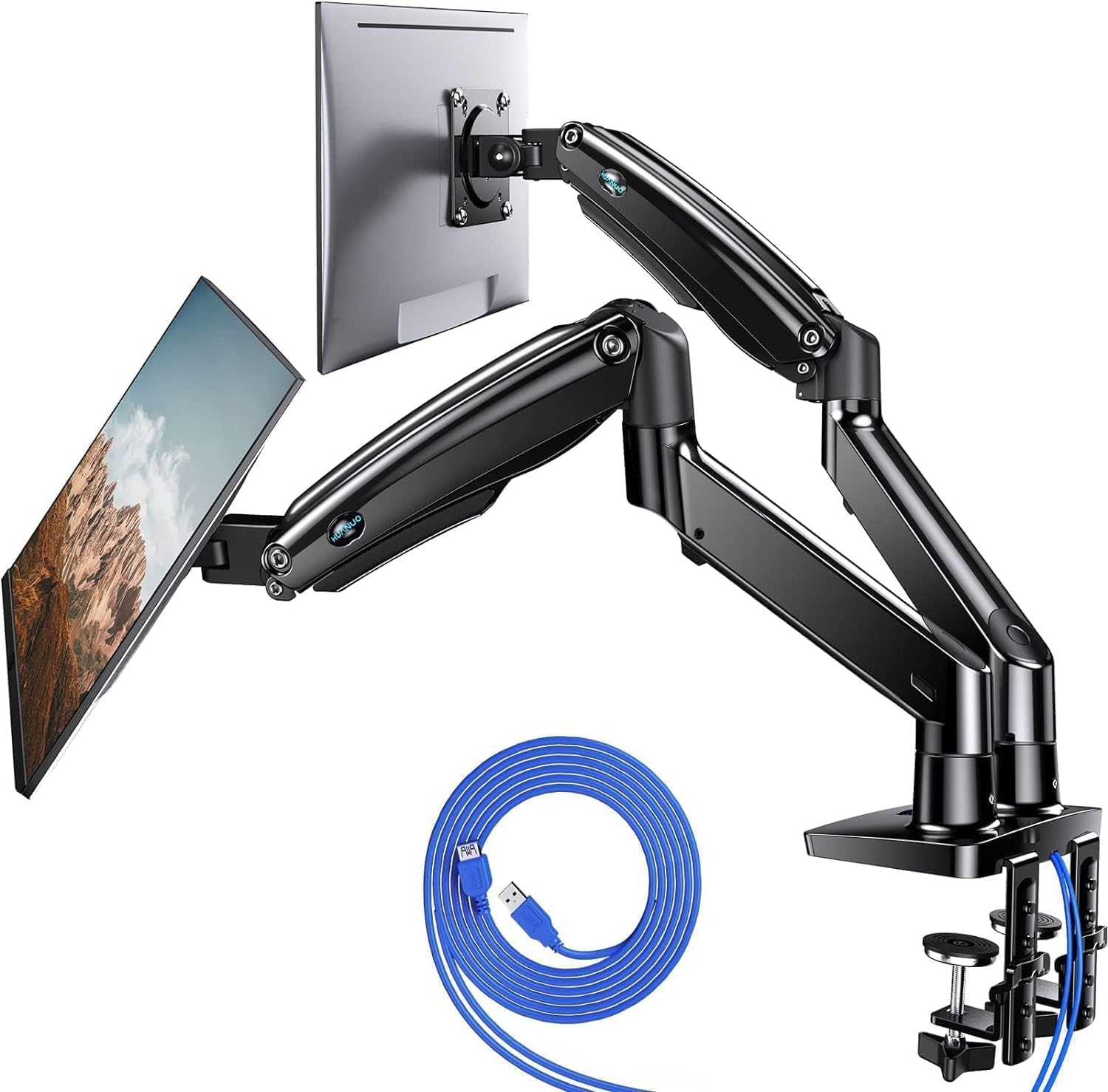
- Supports two 13–40-inch screens up to 26.4 pounds per arm.
- Arms extend up to 25.59 inches and raise monitors up to 21.1 inches.
- Includes two USB ports, a 5.25-foot USB cable and clamp or grommet mounting.
Best For: Setups with larger or heavier displays that also benefit from built-in USB ports.
HUANUO FlowLift Pro Dual Monitor Mount
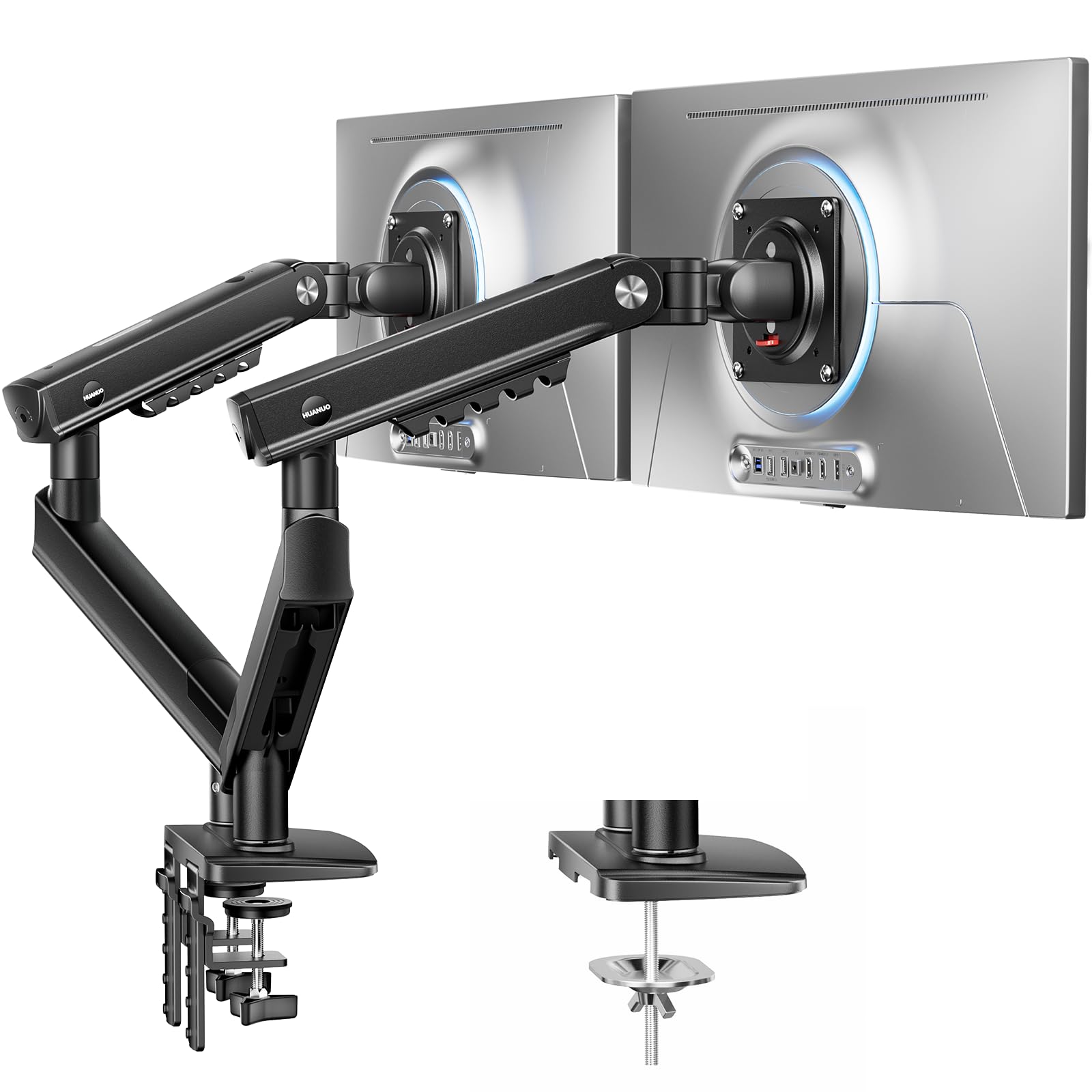
- Fits two 13–27-inch displays weighing 4.4–15.4 pounds each.
- Uses tool-free InstaMount VESA plates and a visual tension indicator.
- Has a dual C-clamp and supports VESA patterns of 75 × 75 or 100 × 100 mm.
Best For: Users with lighter 13–27-inch monitors who value quick VESA attachment and visible tension adjustment.
HUANUO TitanLift Heavy Duty Monitor Arm
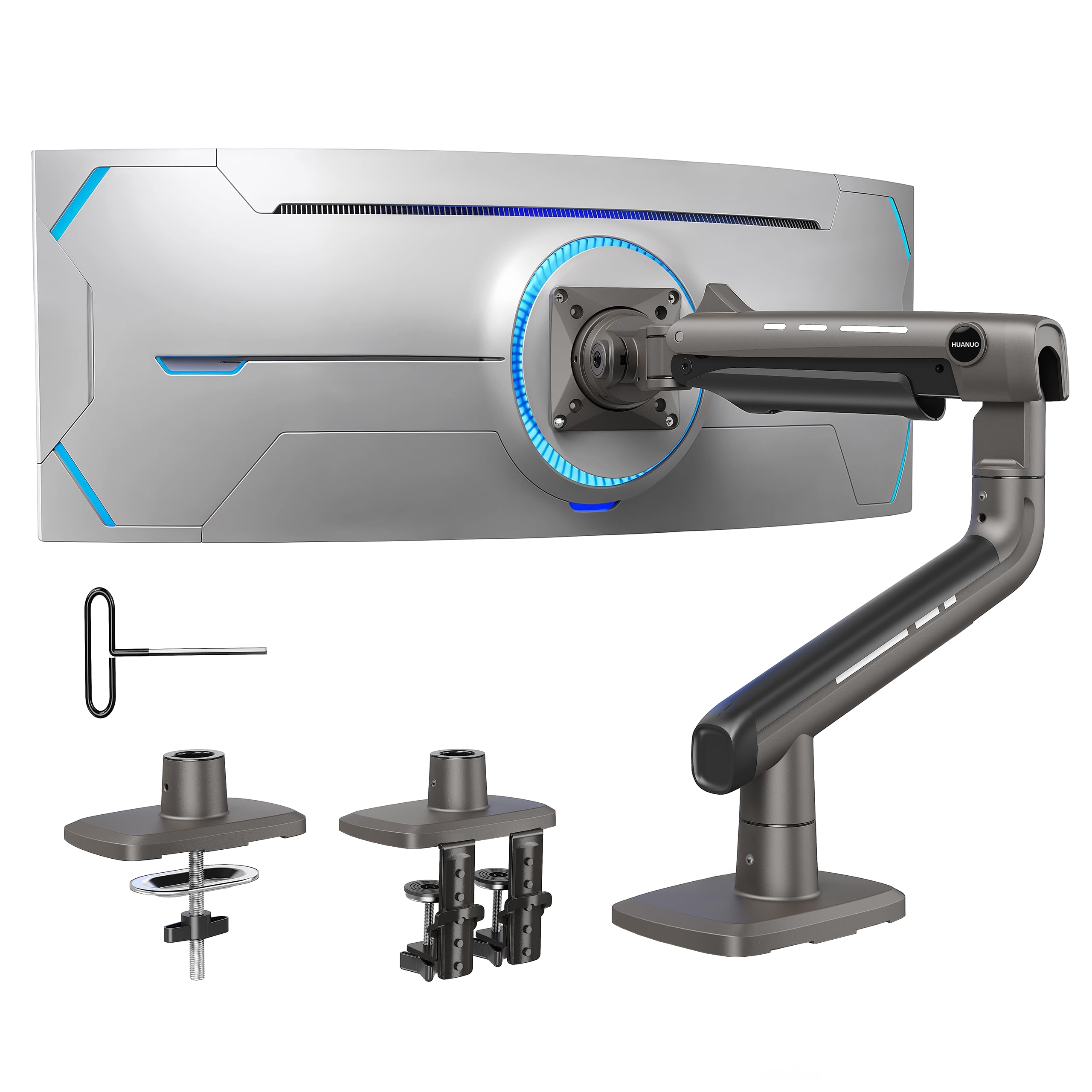
- Supports one 17–49-inch display weighing 6.6–44 pounds.
- Extends up to 22.5 inches and raises the VESA mount up to 19.6 inches.
- Provides tilt, swivel and 360° rotation for screens up to 35 inches.
Best For: A single-screen setup using a large ultrawide monitor rather than two separate displays.
Full Motion for Standard Displays
HUANUO FlowLift™ Dual Monitor Stand, Fully Adjustable Gaming Monitor Desk Mount for 13–32″ Computer Screens, Full Motion VESA 75x75/100x100 with C-Clamp & Grommet Base, Each Arm Holds 4.4 to 19.8 lbs
The HUANUO FlowLift supports two 13–32-inch screens, with each arm rated for 4.4 to 19.8 pounds. Its tilt, swivel and full rotation give you room to bring screens closer, angle them or switch to portrait orientation.
The arms raise monitors up to 15.75 inches, while built-in cable management and the raised mounting position free up desk space. It attaches by C-clamp or grommet.
Before choosing it, confirm each display has a 75 × 75 or 100 × 100 mm VESA pattern and that the desk meets the mount’s material, thickness and underside-clearance requirements.
Best For: People who want independently adjustable positioning for two 13–32-inch displays.
| Pros | Cons |
|---|---|
|
|
Choose this arm for two standard-size monitors when you want broad repositioning without a tall stacked layout. Its 15.75-inch maximum lift is lower than the vertical HUANUO option, while its full-motion range includes substantial tilt and rotation.
Check the desk underside and clamp or grommet fit before buying, then confirm each monitor’s weight and VESA pattern.
Tall Stacked Dual-Screen Setup
HUANUO 17-32 Inch Dual Monitor Stand, Vertical Dual Monitor Mount, Monitor Stand 2 Monitors, Ergonomic Adjustable Tilt/Swivel/Rotate, Weight Max 19.8 lbs, VESA 75/100mm
This HUANUO mount places two 17–32-inch displays in a vertical arrangement, which can suit a desk where side-by-side screens take up too much width. Its 17-inch extension raises the monitors up to 25.19 inches, and each screen can tilt, swivel and rotate.
Cable management helps keep the elevated setup tidy. The mount accepts a C-clamp or grommet installation on solid wood or metal desks within its stated thickness range, but not glass desks.
Each monitor needs a compatible VESA pattern and must weigh 4.4–19.8 pounds.
Best For: Users who prefer one monitor above the other and need extra vertical height.
| Pros | Cons |
|---|---|
|
|
Pick this model when vertical screen placement matters more than side-by-side positioning. Its 25.19-inch maximum height is a distinctive fit for users who want an upper display, while the FlowLift offers a lower maximum lift and a broader screen-size floor.
Verify that the stacked arrangement suits your viewing space, and check monitor weight, VESA compatibility and desk material before installation.
Higher Capacity for Large Displays
HUANUO Dual Monitor Stand for 13″–40″, Premium Dual Monitor Mount with USB, Height Adjustable Monitor Stand for 2 Monitors, VESA Mount with Clamp/Grommet Base, Holds 26.4lbs per Arm, HNDS7
The HUANUO HNDS7 supports two 13–40-inch monitors, with a maximum rated load of 26.4 pounds per arm. Its longer arms extend up to 25.59 inches, and the screens can rise to 21.1 inches, tilt, swivel and rotate.
A larger base with a dual C-clamp provides the desk attachment, or you can use the grommet option; both suit desks up to 3.54 inches thick. Two built-in USB ports connect through a 5.25-foot USB cable.
Check screen dimensions, weight and VESA pattern, as well as the desk’s edge and grommet-hole fit.
Best For: Setups with larger or heavier displays that also benefit from built-in USB ports.
| Pros | Cons |
|---|---|
|
|
Choose the HNDS7 if your two screens are larger or heavier than the limits of the other dual mounts here. It supports up to 26.4 pounds per arm and includes USB ports, but costs more in the snapshot than the other candidates.
Confirm the desk can accommodate its mounting base and that both monitors have the required VESA pattern; the USB connection uses the included 5.25-foot cable.
Tool-Free VESA Attachment
HUANUO FlowLift Pro Dual Monitor Mount for 13–27" Screens, MechaSpring Monitor Stand, Adjustable Monitor Arms for 2 Monitors with Tilt/Swivel/Rotation, Tool-Free VESA Mount, Max Load 15.4 lbs
The FlowLift Pro is sized for two 13–27-inch monitors weighing 4.4–15.4 pounds each. Its tool-free InstaMount VESA plates make attaching or detaching displays simpler, while the PrecisionView window shows tension adjustment through a yellow indicator.
LockSteady is designed to resist sagging during frequent movement and to hold screens in place for a fixed setup. The mount has a dual C-clamp and is recommended for wood desks 0.59–3.54 inches thick.
Confirm monitor weight and VESA fit, plus the desk edge shape, before choosing it.
Best For: Users with lighter 13–27-inch monitors who value quick VESA attachment and visible tension adjustment.
| Pros | Cons |
|---|---|
|
|
This is a practical match for smaller displays when quick monitor attachment and a visible tension indicator are priorities. Its 15.4-pound limit rules out heavier screens supported by the HNDS7 or the standard FlowLift.
The product details also include a TÜV Rheinland certification and a stated three-times-load test; check that the desk edge and screen specifications fit before buying.
Single Arm for an Ultrawide Display
HUANUO TitanLift Heavy Duty Monitor Arm for Screens up to 49", Holds 44 lbs, Aluminum Ultrawide Screen Monitor Mount, Fully Adjustable Single Gaming Desk Mount with Dual C-Clamp, Max VESA 100x100mm
The HUANUO TitanLift is a single monitor arm, but its support for screens from 17 to 49 inches and up to 44 pounds makes it a relevant alternative for someone comparing dual-monitor arrangements with one ultrawide. It extends up to 22.5 inches and raises the VESA mount to 19.6 inches above the desk.
Tilt and swivel adjustment are available, while 360° rotation is supported for screens up to 35 inches. The arm uses a dual C-clamp on a recommended wood desk 0.8–3.5 inches thick.
Confirm that your monitor’s weight, VESA pattern and desk underside all fit.
Best For: A single-screen setup using a large ultrawide monitor rather than two separate displays.
| Pros | Cons |
|---|---|
|
|
Consider the TitanLift if one large ultrawide could replace two displays in your workspace. It is the only single-screen mount in this group, so it does not provide the independent dual-screen layout of the other products.
In return, it supports a display up to 49 inches and 44 pounds. Check whether your monitor is within the rotation limit if portrait or full rotation matters, and confirm the desk clamp has clear access.
How to Choose Dual Monitor Arms
How We Picked Dual Monitor Arms
These five options cover different ways to arrange two displays: standard side-by-side arms, a tall stacked mount, and arms with higher per-screen capacity or simpler VESA attachment. The TitanLift is included as a single-ultrawide alternative for readers weighing one large screen against two separate monitors.
The main selection checks are screen size, weight per arm, VESA pattern, adjustment range and desk mounting. Those details determine whether a mount can support your equipment and fit your work surface.
USB ports, cable routing, arm reach and maximum height help distinguish setups once compatibility is established.
Comparing Dual Monitor Arms
For standard displays up to 32 inches, the FlowLift supports up to 19.8 pounds per arm and provides broad tilt, swivel and rotation. The stacked HUANUO mount also supports up to 19.8 pounds, but its 25.19-inch maximum height and vertical layout set it apart.
The HNDS7 raises the load limit to 26.4 pounds per arm and reaches screens up to 40 inches; it also adds two USB ports.
The FlowLift Pro has the narrowest screen and load range here, with a 15.4-pound per-arm maximum, while adding tool-free VESA plates and a visible tension indicator. The TitanLift supports a single ultrawide rather than two separate displays, with a 44-pound maximum load.
Compare the monitor’s actual weight and VESA pattern against the arm’s limits before choosing by convenience or reach.
| Product | Standout features | Best for |
|---|---|---|
| HUANUO FlowLift Dual Monitor StandCheck Price |
| People who want independently adjustable positioning for two 13–32-inch displays. |
| HUANUO 17–32-Inch Stacked Monitor MountCheck Price |
| Users who prefer one monitor above the other and need extra vertical height. |
| HUANUO HNDS7 Dual Monitor StandCheck Price |
| Setups with larger or heavier displays that also benefit from built-in USB ports. |
| HUANUO FlowLift Pro Dual Monitor MountCheck Price |
| Users with lighter 13–27-inch monitors who value quick VESA attachment and visible tension adjustment. |
| HUANUO TitanLift Heavy Duty Monitor ArmCheck Price |
| A single-screen setup using a large ultrawide monitor rather than two separate displays. |
Check Monitor and Desk Compatibility
Start with the back of each monitor. The dual arms require 75 × 75 or 100 × 100 mm VESA mounting holes, and their supported screen sizes and weights differ.
Check the monitor itself against the range for each arm; a screen diagonal alone does not confirm compatibility.
Next, inspect the desk. The standard FlowLift and FlowLift Pro recommend wood surfaces, while the stacked mount accepts wood or metal but not glass.
The HNDS7 supports clamp or grommet mounting, with a specified grommet-hole diameter. TitanLift also recommends a wood desk and needs clear underside space.
Desk thickness and edge shape can affect whether the base fits securely.
Choosing a Monitor Arm by Layout and Reach
A stacked mount uses vertical space and can keep both screens in a narrower horizontal footprint. Side-by-side arms make it easier to place the displays next to each other, while longer reach helps when the desk is deeper or you want to pull a screen toward you.
Maximum height matters if you need one display above the other or want to raise screens higher from the desktop.
Consider how often you reposition your monitors. The FlowLift offers full-motion adjustments, and the FlowLift Pro emphasizes tool-free VESA attachment and visible tension adjustment.
If your priority is a fixed screen position, the Pro’s LockSteady feature is intended to resist sagging and hold position. Cable management appears across these options; the HNDS7 also provides two USB ports connected by its included cable.
Which Dual Monitor Arm Setup Fits Your Desk?
Choose the standard FlowLift for two 13–32-inch monitors and broad positioning options. The stacked HUANUO mount fits a vertical layout where extra height is useful.
For larger or heavier displays, compare the HNDS7’s 40-inch screen range and 26.4-pound arm capacity with your monitor specifications. Lighter screens up to 27 inches may suit the FlowLift Pro’s tool-free plates and tension indicator.
If you are considering one large screen instead of two, the TitanLift supports a single ultrawide up to 49 inches and 44 pounds. In every case, check VESA pattern, screen weight, desk material, thickness and mounting clearance before purchase.